
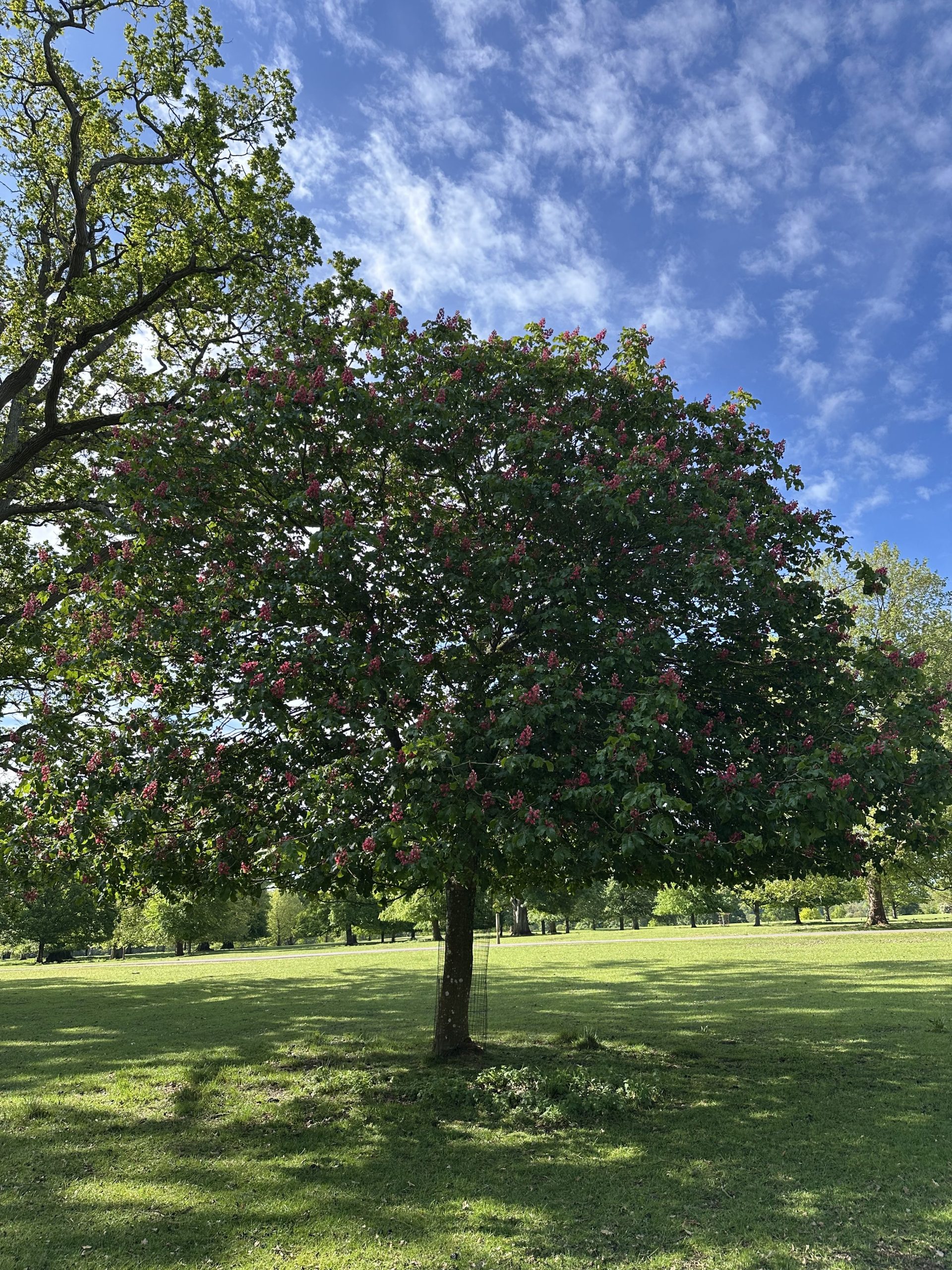
25 Jun Red Horse Chestnut
Red Horse Chestnut (Aesculus x carnea)
A hybrid born from two very different parents, the red horse chestnut is one of the most striking ornamental trees to grace the British landscape. For a few glorious weeks each year, its broad canopy erupts with towering spikes of deep pink and crimson flowers, transforming parks, avenues and gardens into a blaze of colour. Larger and more vibrant than many flowering trees, it combines the grandeur of the horse chestnut with a richness all of its own.
Thought to have originated in Germany during the early nineteenth century it is a cross between the European horse chestnut (Aesculus hippocastanum) and the North American red buckeye (Aesculus pavia), and has since spread rapidly through European parks and estates.
Victorian gardeners were particularly fond of the tree. The era’s passion for collecting exotic plants and creating dramatic landscapes made the red horse chestnut an ideal choice. It combined the familiar stature of the horse chestnut with flowers far more colourful than anything native trees could offer. Although it lacks the centuries of folklore attached to older native species, it has inherited some of the symbolism associated with horse chestnuts generally. These trees were often planted in grand avenues and public spaces, becoming associated with prosperity, civic pride and permanence. Today, many mature specimens found in parks and large gardens are living reminders of Victorian planting schemes and nineteenth-century horticultural ambition.
Appearance and Identification
The red horse chestnut is a handsome, broad-crowned tree that can reach 15–20 metres in height, often developing a rounded, spreading form as it matures.
Its leaves are instantly recognisable as those of a horse chestnut. Each leaf is made up of five to seven leaflets radiating from a central point. The foliage emerges bronze-tinted in spring before maturing to a rich green through summer. In autumn, the leaves turn soft shades of yellow and bronze before falling.
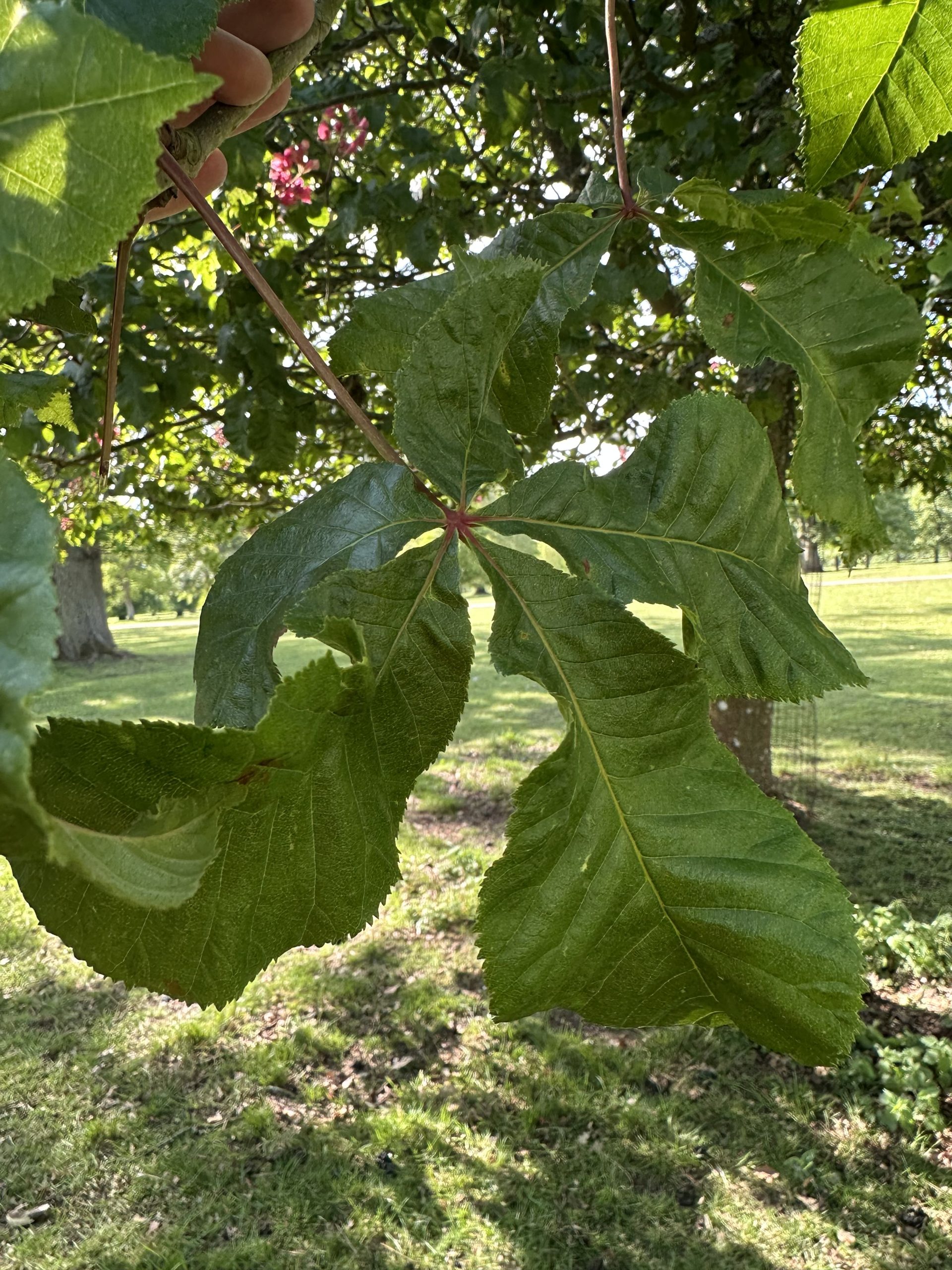
Red horse chestnut leaves
In May and early June, the tree produces upright flower clusters known as panicles, sometimes reaching 20 centimetres in length. These dense spikes are packed with flowers in shades ranging from rosy pink to deep crimson-red. The flowers are highly attractive to bees and other pollinators, making the tree a valuable source of nectar during late spring.
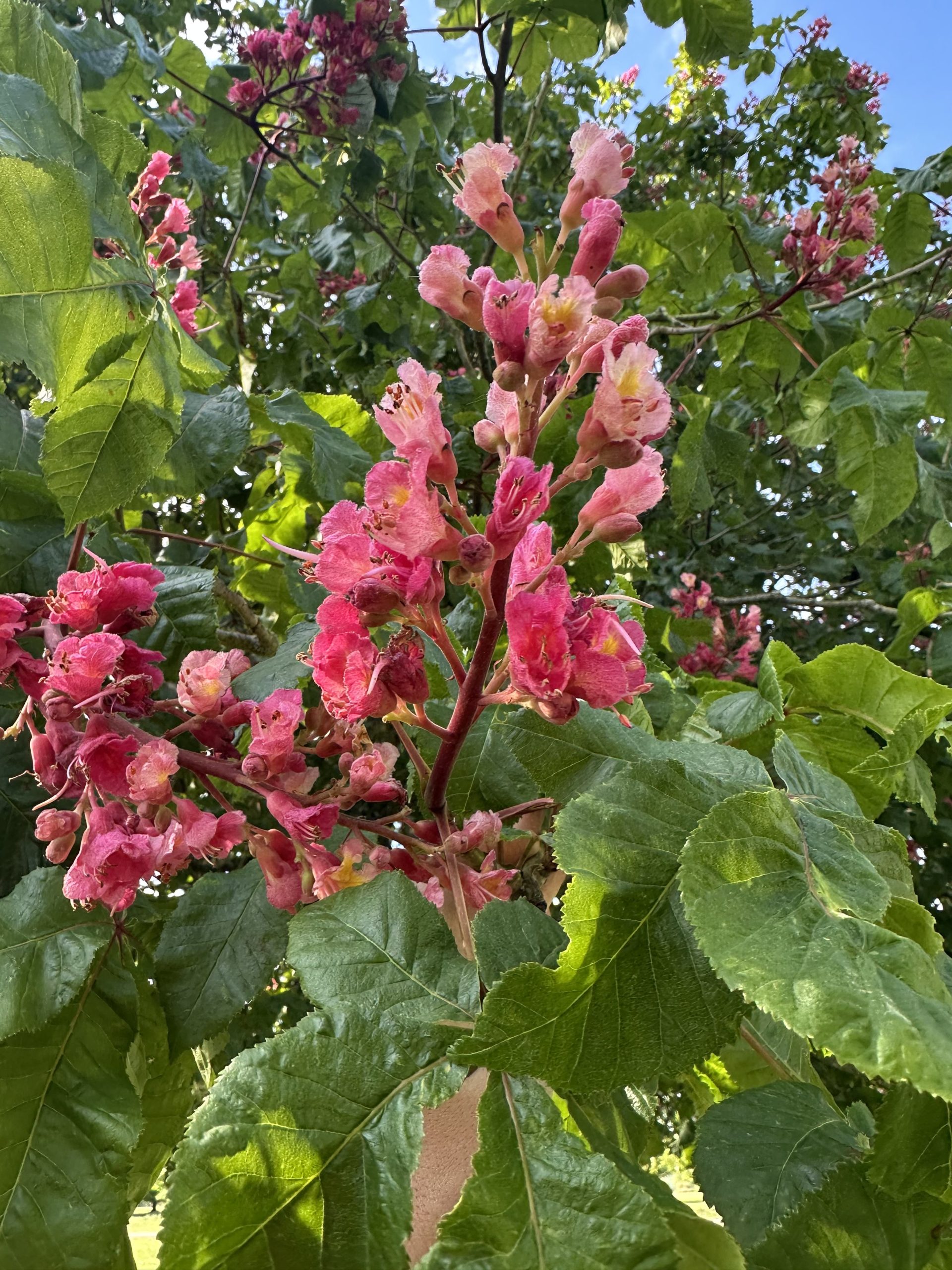
Red horse chestnut flowers
Unlike the common horse chestnut, the red horse chestnut produces relatively few fruits. When conkers do appear, they are usually smaller, smoother and less abundant than those of its parent species.
Propagation and Control
The red horse chestnut is adaptable and relatively easy to grow when given enough space. It tolerates urban conditions reasonably well and is often found in towns and cities, where its spring display provides a welcome splash of colour. Although hardy throughout most of Britain and northern Europe, it performs best where prolonged drought is uncommon.
Compared to the common horse chestnut it is relatively resilient, however it is susceptible to bleeding canker which can result in heavily disfigured bark and ultimate decline.
Source and Reference Materials
Information detailed in this post has been obtained from the author’s own knowledge and photographic library where possible. Additional source of information and photographs include:
Van den Berk, B.V. (2004). Van den Berk on Trees. Van den Berk Nurseries