

28 May Service Tree
Service Tree (Sorbus domestica)
We are taking a closer look at the service tree this month. Distinct from the wild service tree, this species is native to western, central and southern Europe, northwest Africa and southwest Asia, and generally considered to be rare. In Britain it has always been uncommon – originally popular in monastery gardens, surviving specimens are now mostly found in pockets of ancient woodland and old estates.
This tree is a slow grower, although it can reach 20 metres or more in height given enough space and time. Its identifying feature is its fruit, known as ‘sorb apples’, which ripen in the autumn. Sharp and astringent when picked, they mellow after bletting, and historically they were then served alongside meals or fermented into alcoholic drinks. The tree’s name is thought to have come from these old practices.
Its wood is exceptionally fine-grained, dense and hard, making it a popular choice for craftspeople. It is often planted as a heritage or conservation species, and thanks to its longevity it has become associated with endurance and stewardship of the land.
Appearance and Identification
Service Tree appearance
The service tree grows with a broad, rounded crown and its foliage has a light, feathery texture due to its pinnate leaves. Each leaflet is oval-shaped with finely serrated edges, arranged in pairs along a central stem. In autumn these turn gold, amber and burnt orange in colour.

Service Tree leaves
In late spring the tree produces clusters of creamy-white flowers which are rich in nectar and attractive to pollinating insects. These become the small fruits, or sorb apples, which can resemble tiny pears or small apples.
The bark is brown, smooth on young trees but becoming scaly and rough as the tree ages.
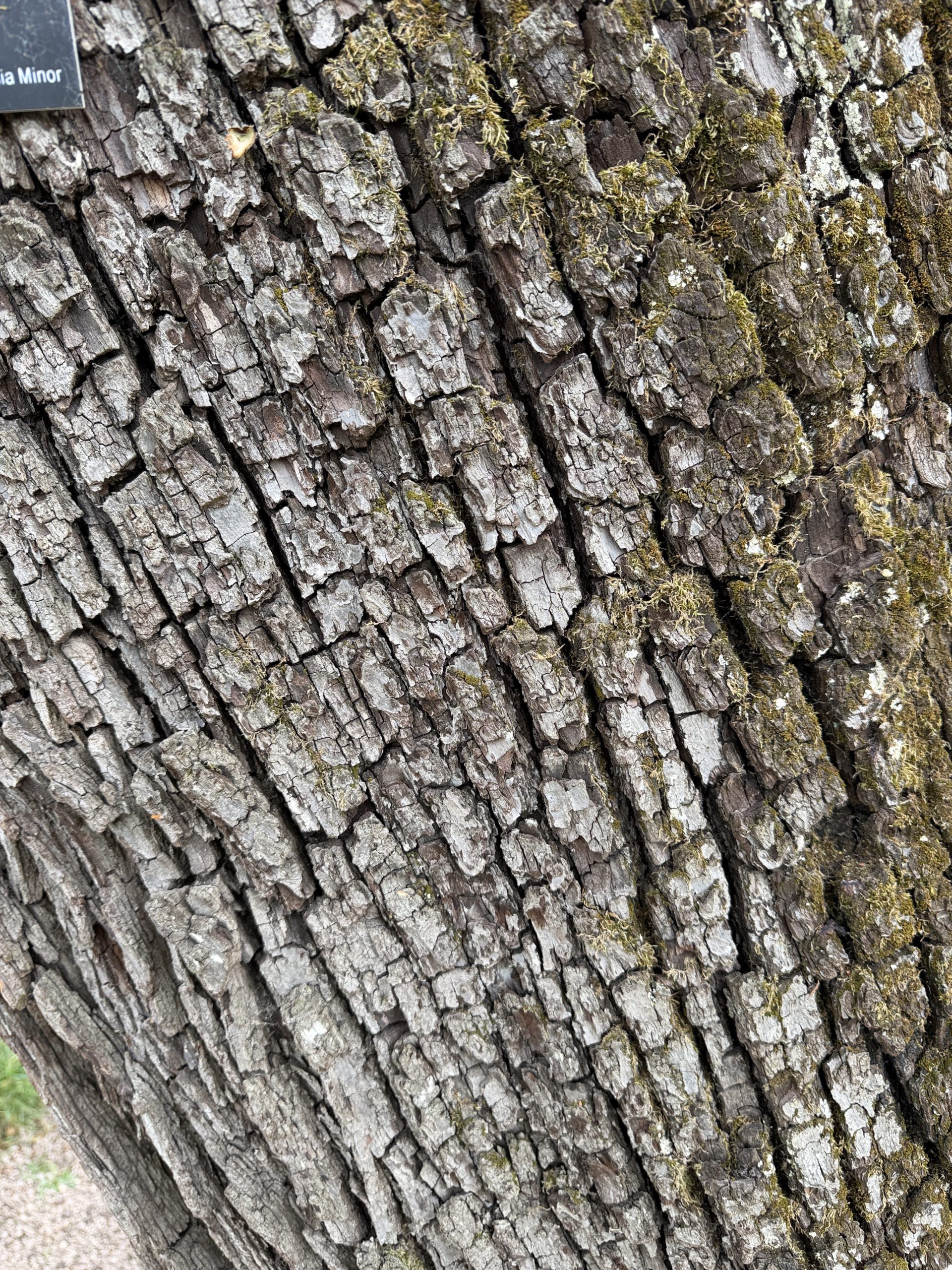
Service Tree bark
Propagation and Control
The service tree prefers conditions that mirror the old woodland edges and open slopes where it evolved. It thrives in full sun or dappled shade and likes chalky or limestone-rich soils. It grows slowly in youth and may take many years before fruiting well, but once established it can become remarkably resilient and long-lived, resulting in a relatively hardy and trouble-free specimen.
Source and Reference Materials
Information detailed in this post has been obtained from the author’s own knowledge and photographic library where possible. Additional source of information and photographs include:
Van den Berk, B.V. (2004). Van den Berk on Trees. Van den Berk Nurseries