
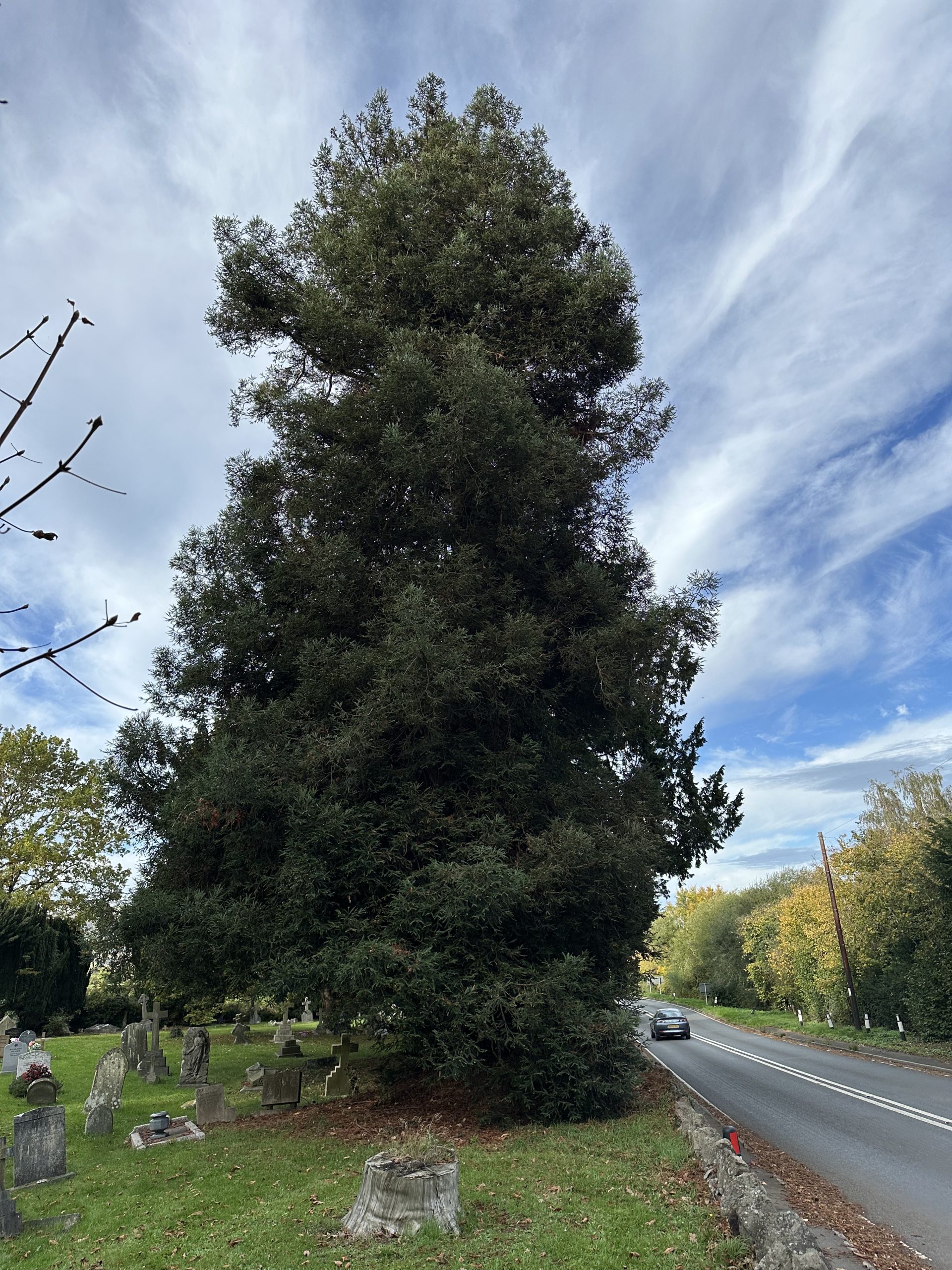
09 Dec Coast Redwood
Coast Redwood (Sequoia sempervirens)
The coast redwood (Sequoia sempervirens) stands as one of nature’s most awe-inspiring features – a tree of immense height, ancient lineage, and ecological importance. Native to the misty coastal regions of California and southern Oregon, this majestic species embodies endurance, resilience, and quiet grandeur.
Early European settlers in California often spoke of the redwoods as “cathedrals of nature”. Stories arose of redwoods as sentinels guarding the coastline, their immense height guiding travellers through fog and forest. For many Native American tribes of California the redwood is considered sacred. It symbolises longevity, wisdom, and protection. Redwood bark and wood were used in ceremonial structures, and standing trees were often treated with great respect, never felled without spiritual purpose.
In contemporary culture, redwoods have become icons of environmental preservation. These giants serve as keystone species, supporting complex forest ecosystems. The ancient forests, some dating back over 2,000 years, inspire global conservation movements, and their ability to regenerate from burls and fallen trunks – sprouting new shoots even after fire or injury – have made them a powerful symbol of resilience and rebirth.
As well as their ecological benefits, coast redwoods have long been valued for their remarkably durable and decay-resistant wood. Redwood lumber is lightweight yet strong, with a natural resistance to rot and insects. It is prized for outdoor construction such as decks, fences, shingles, and furniture where longevity and weather resistance are essential.
Appearance and Identification
The foliage of Sequoia sempervirens is composed of two types of leaves: flat, needle-like leaves on shaded lower branches, and scale-like leaves on the sunlit upper branches. The needles are arranged in flattened sprays, dark green above and pale beneath, helping the tree capture moisture from fog. In spring, the coast redwood produces small, inconspicuous cones about 2 to 3cm long, which contain tiny seeds dispersed by wind.
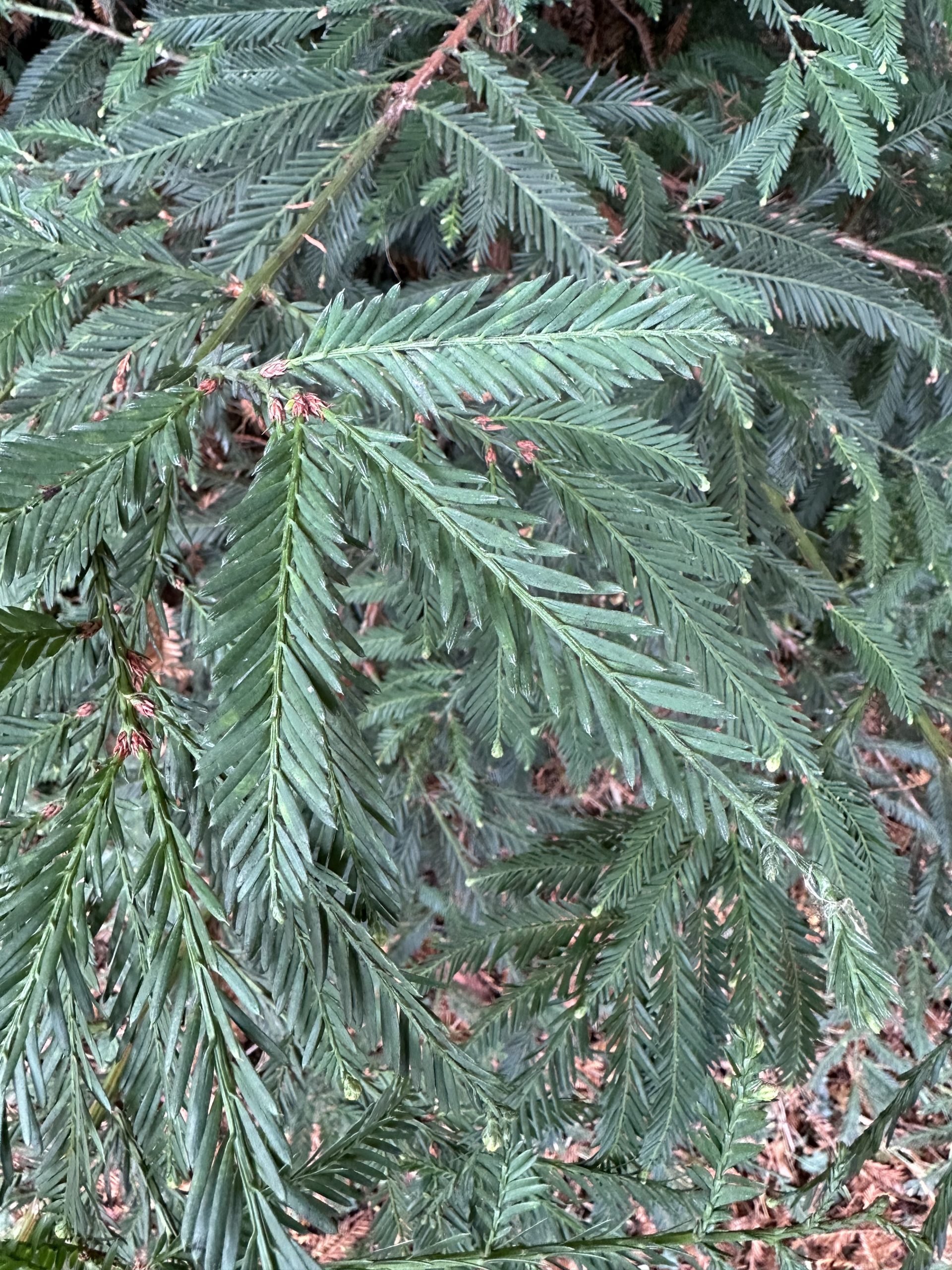
Coast redwood leaves
Mature trees typically have straight trunks that can measure more than 7 metres in diameter at the base. The bark is thick – up to 30cm – fibrous, and deeply furrowed, coloured a rich reddish-brown that gives the tree its name.
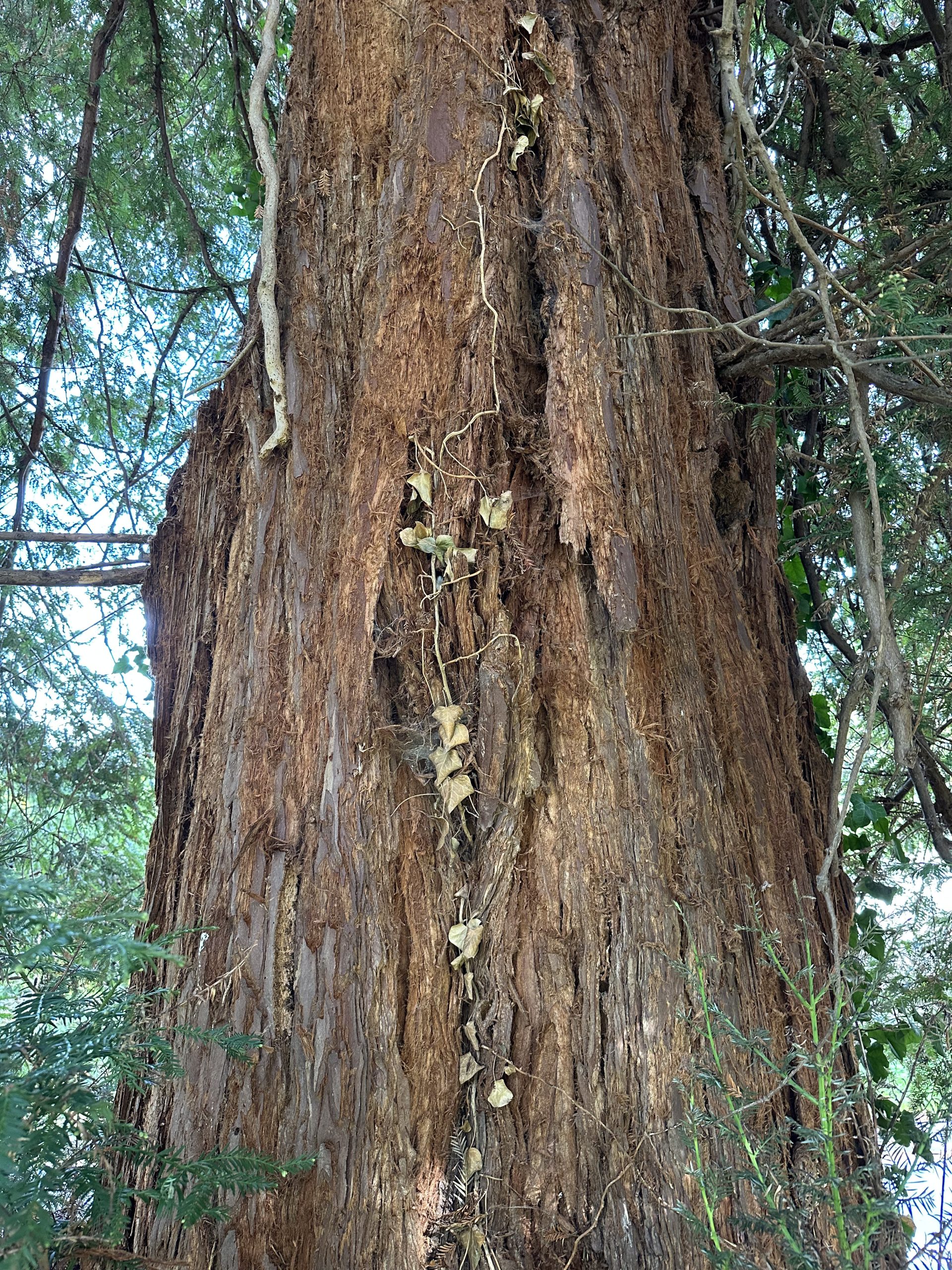
Coast redwood trunk
Propagation and Control
Coast redwoods thrive in the cool, moist coastal belt of the Pacific Northwest, typically within 25 miles of the ocean. This narrow ecological range provides the fog and rainfall essential to the species’ survival. The trees favour deep, well-drained alluvial soils found in river valleys and floodplains, where periodic flooding replenishes nutrients.
Fog plays a vital role in their ecology – redwoods absorb moisture directly through their leaves and bark, allowing them to survive even in drier summer months. The understory of a redwood forest is usually shaded, humid, and carpeted with ferns, sorrel, and shade-loving shrubs, creating a rich, multilayered ecosystem.
Coast redwoods are naturally resistant to insect attack, fungal infection and rot thanks to the presence of terpenoids and tannic acid in their leaves, roots, bark and wood. Despite this they do face significant threats. From the mid-19th century onward, redwood forests were heavily logged for their valuable timber and it is estimated that over 90% of the original old-growth redwood forests were cut down by the early 20th century. Only scattered remnants of these ancient groves survive today, mostly within protected parks.
Rising temperatures and prolonged droughts threaten the delicate balance redwoods depend on. Reduced fog frequency, in particular, may affect their ability to capture moisture. Additionally, shifting precipitation patterns and wildfires pose new challenges to forest regeneration. Thankfully, large-scale conservation initiatives have emerged to protect and restore redwood ecosystems and modern restoration efforts focus on reestablishing secondary forests – areas once logged but now capable of regrowth.
Source and Reference Materials
Information detailed in this post has been obtained from the author’s own knowledge and photographic library where possible. Additional source of information and photographs include:
Van den Berk, B.V. (2004). Van den Berk on Trees. Van den Berk Nurseries