
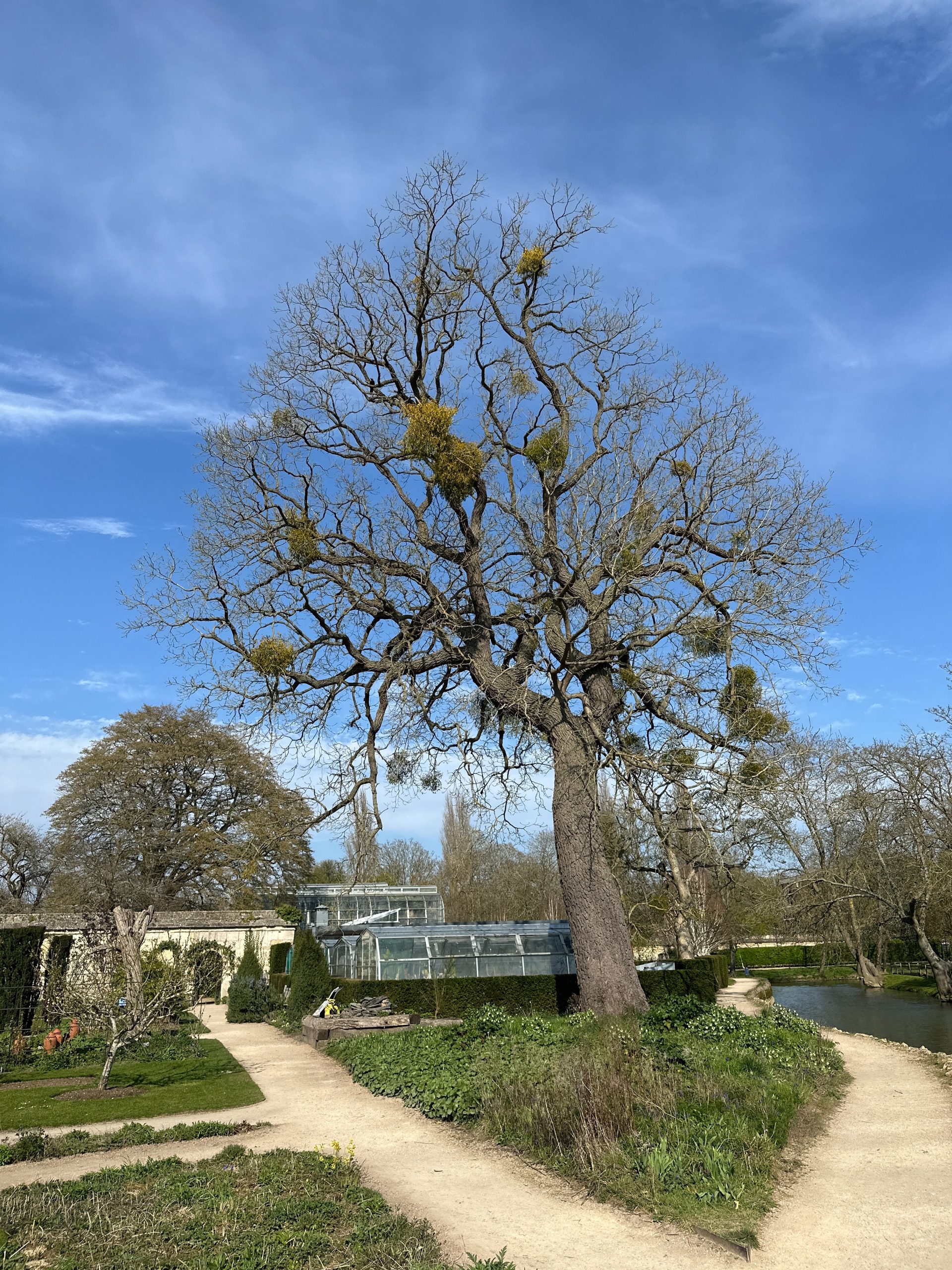
25 Feb Black Walnut
Black Walnut (Juglans nigra)
This month we are turning our attention to one of North America’s most prized native hardwood trees – the black walnut. Its native range extends across much of the eastern US, and it was introduced to Europe in 1629. In Britain it thrives best in the warmer regions towards the south.
Its rich, dark timber is exceptionally versatile, making these trees not only aesthetically pleasing but also commercially valuable. Its heartwood is chocolate-brown, strong and highly workable, it polishes beautifully and is therefore widely used for fine furniture, cabinetry, veneer and musical instruments.
The nuts it produces are edible and highly nutritious, and a favourite of squirrels. Indigenous Americans used them as a food source, and in American folklore walnut trees were often planted near homesteads as a symbol of prosperity.
Appearance and Identification
A large, deciduous broadleaf tree, it can reach heights of around 30-40m, developing a broad, rounded crown in open settings.
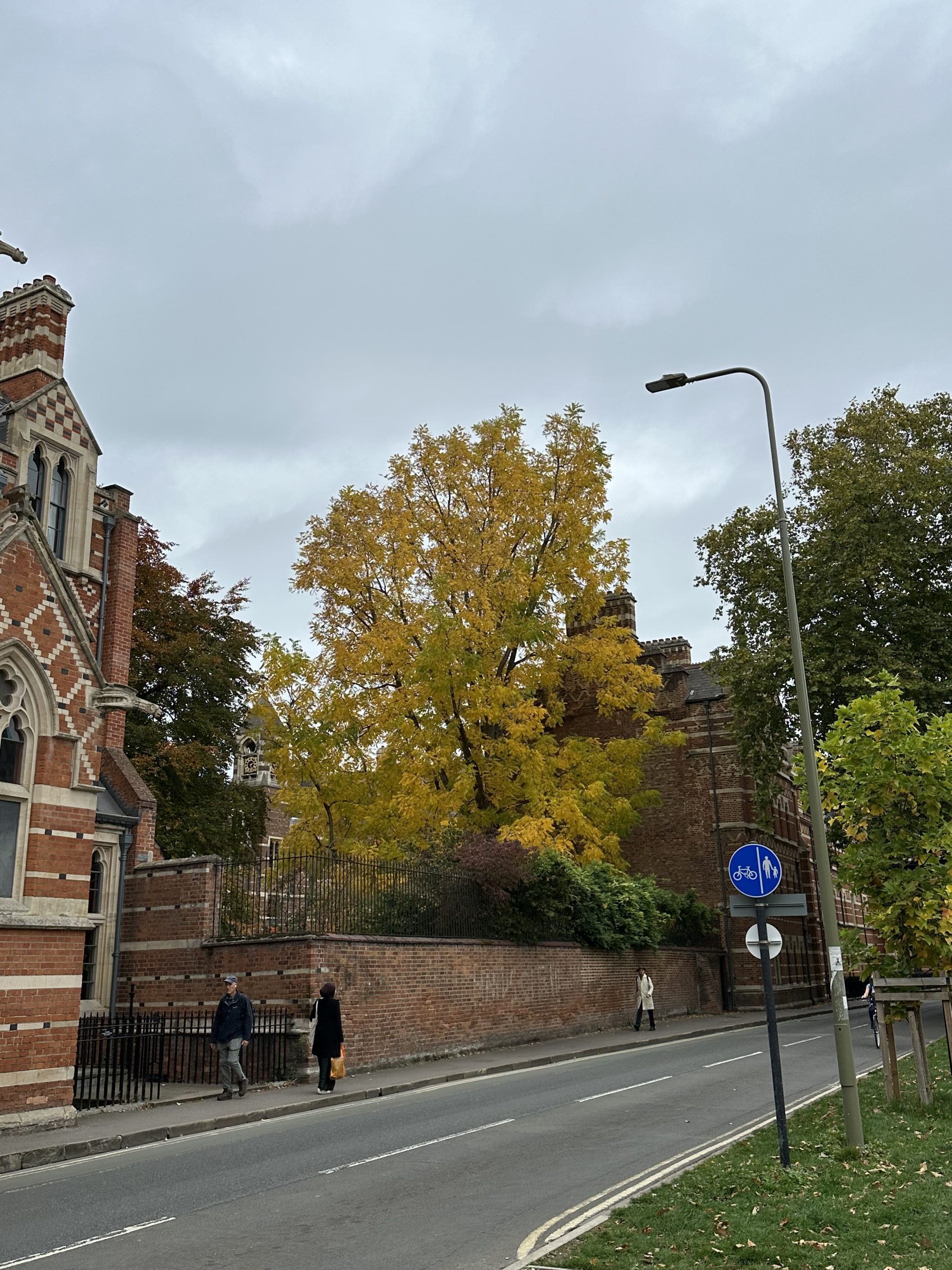
Mature tree in Oxford (demonstrating Autumnal colour)
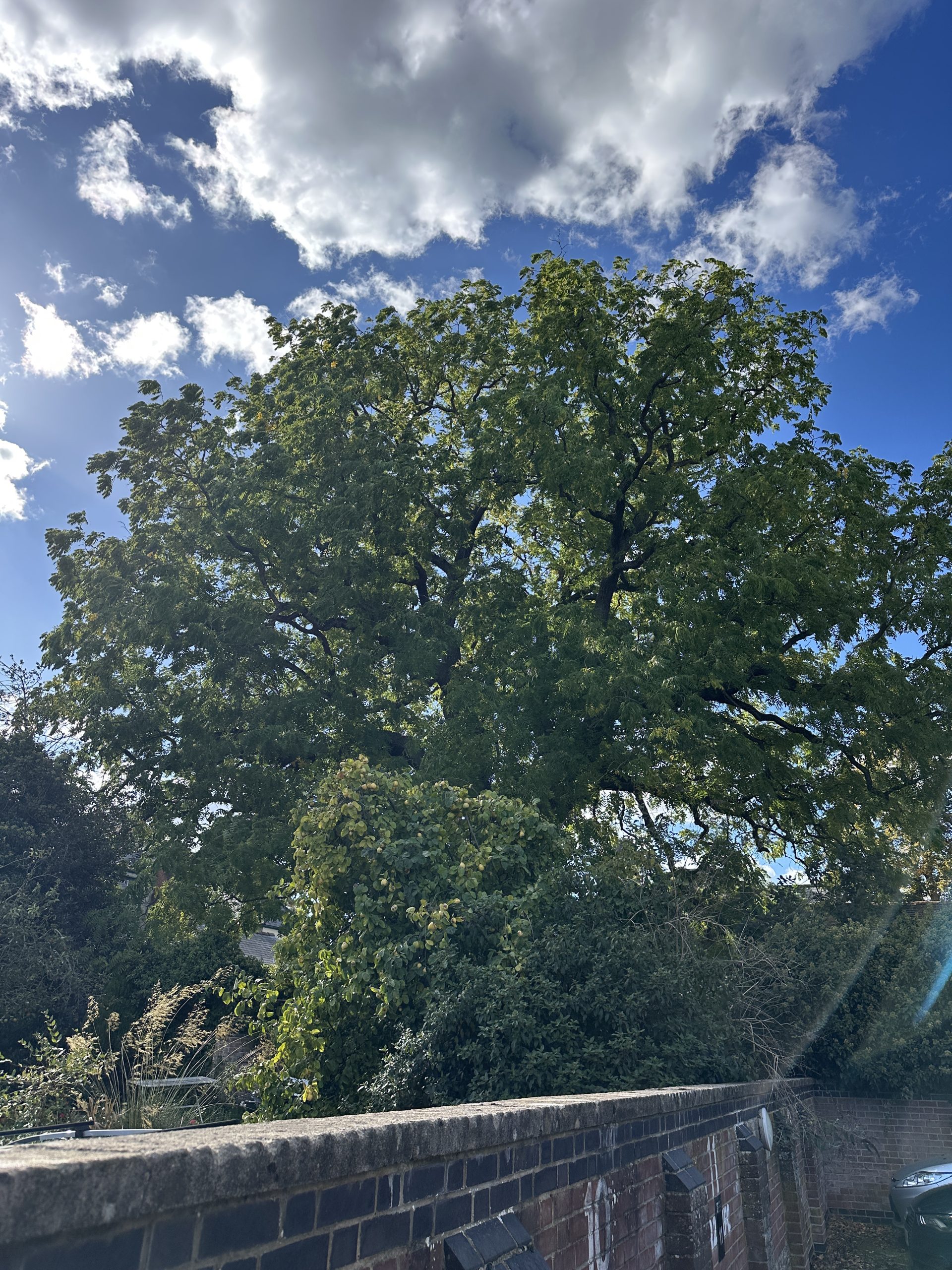
Mature black walnut in Oxford
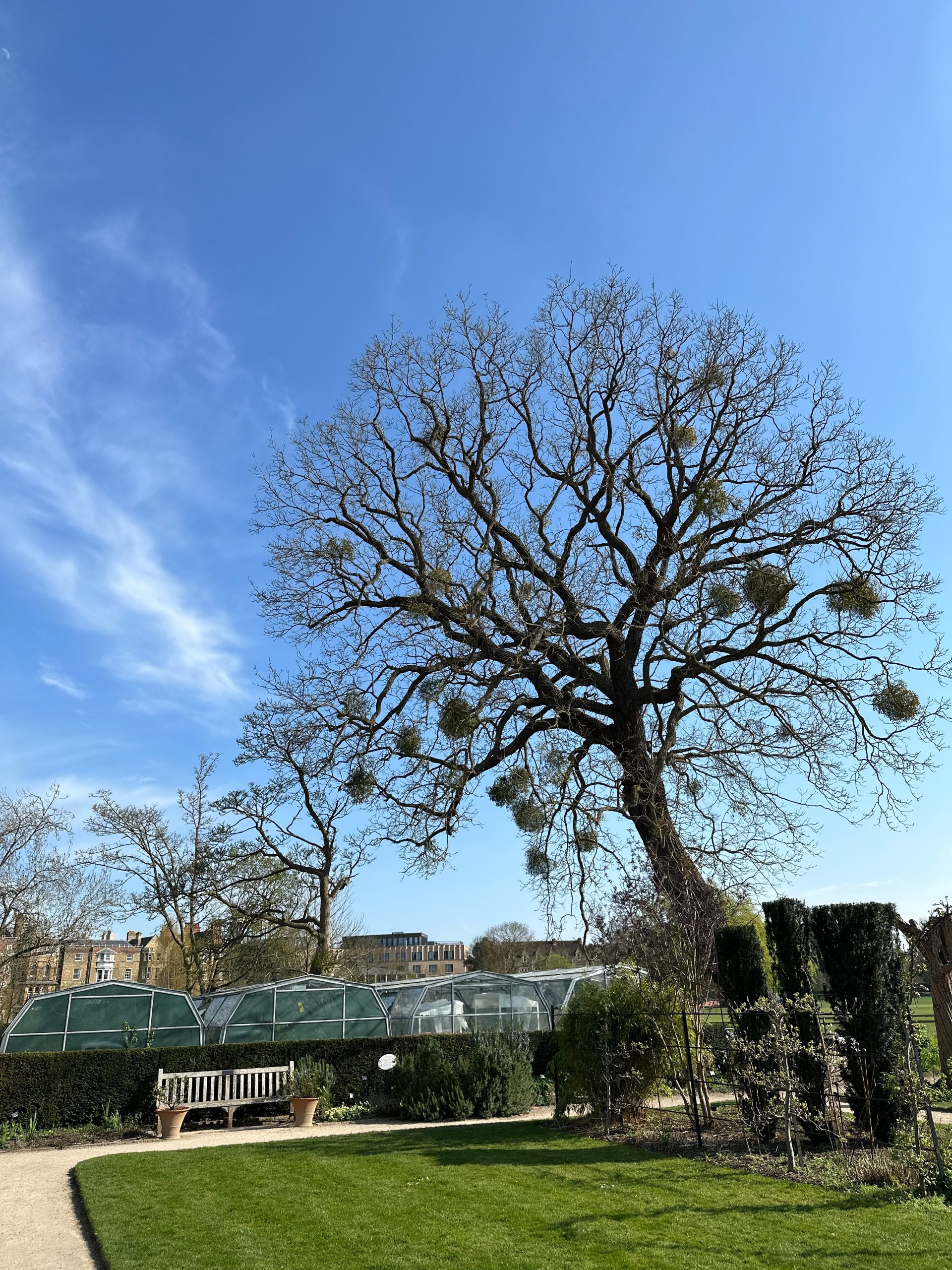
Black walnut at Oxford Botanic Gardens
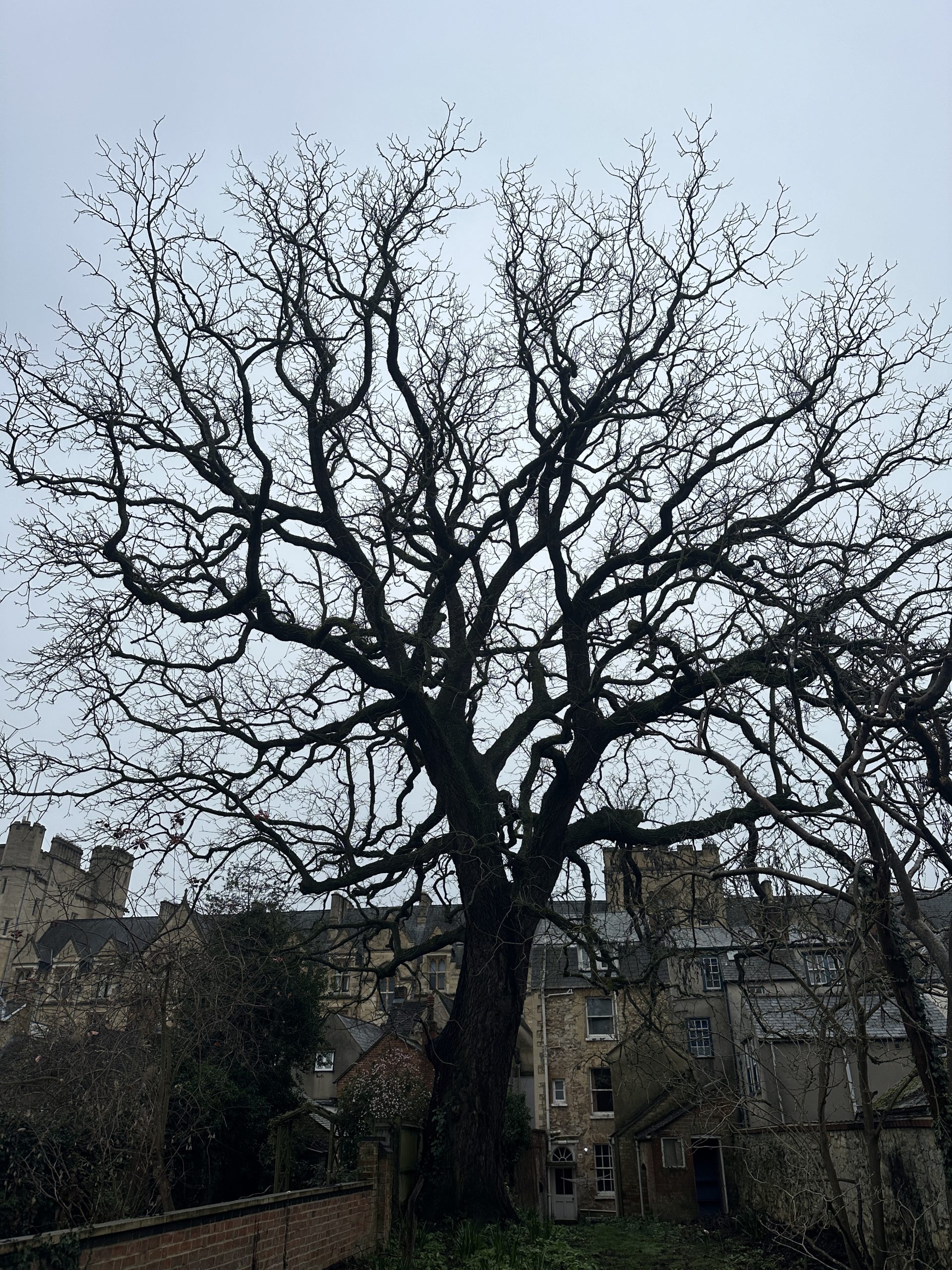
Mature black walnut in Oxford
As its name suggests, the bark of the black walnut is dark brown to nearly black, deeply furrowed, and forms interlacing ridges that create a diamond-like pattern – an important identifying feature on mature trees.
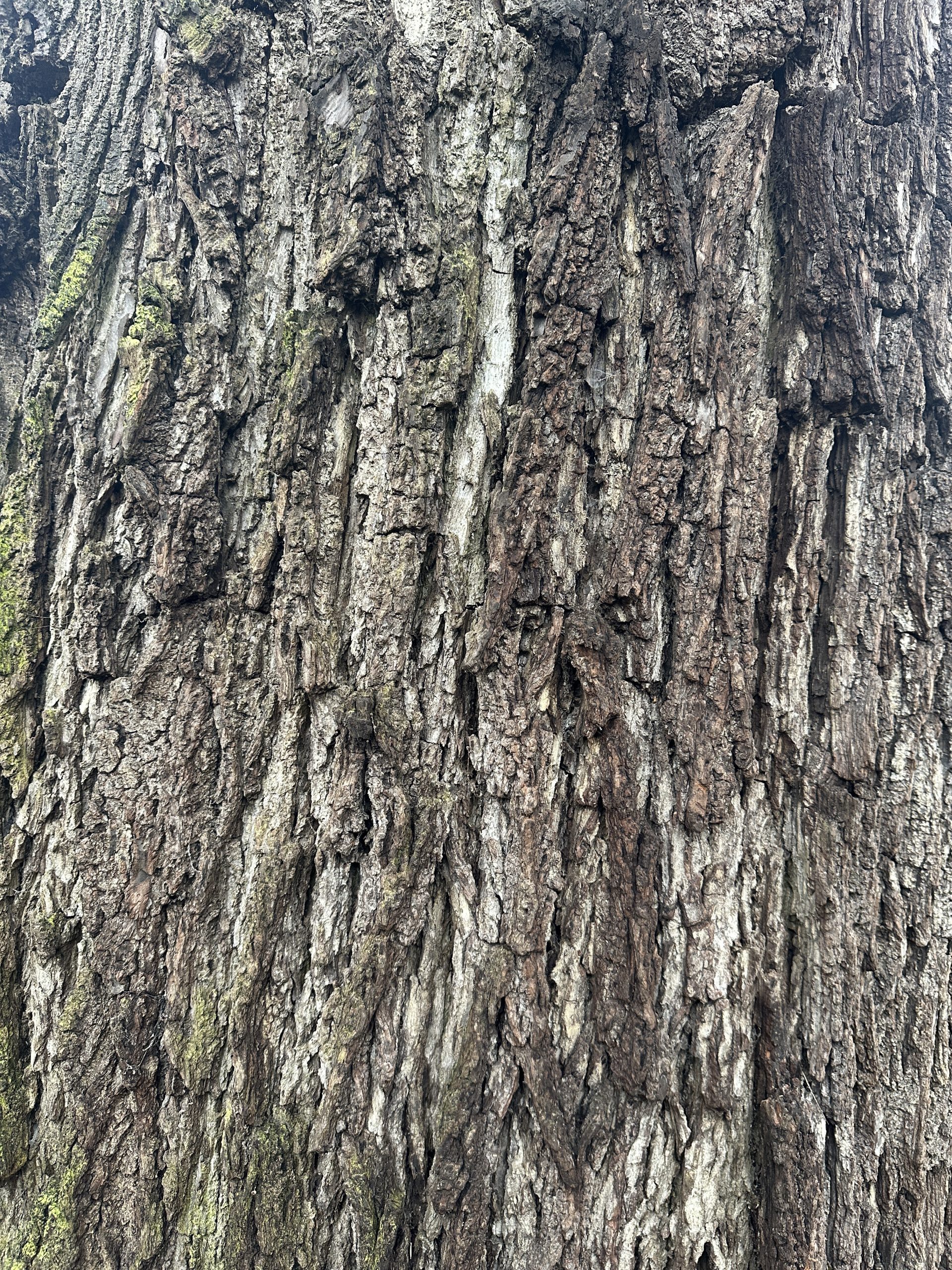
Black walnut bark
Its leaves are pinnately compound, the individual leaflets are pointed and irregularly toothed, and they are arranged alternately on the stem in 7-9 pairs.
The buds of Black Walnut are covered in small white hairs, with a large terminal bud and smaller lateral buds. Leaf scars are horseshoe shaped.
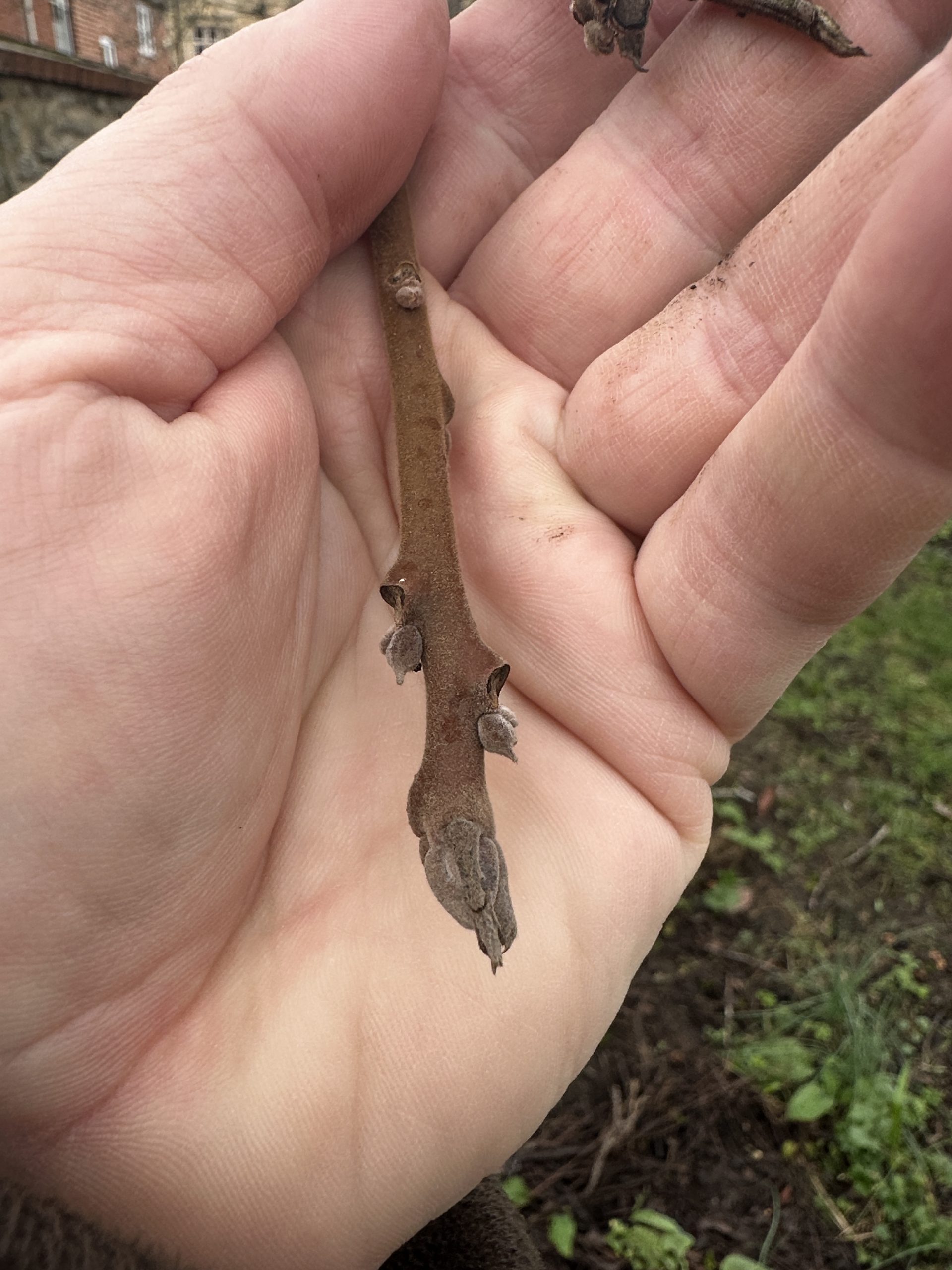
Black walnut buds
Black walnut is monoecious, producing male catkins and female flowers from late May to early June. In autumn these flowers become a plum-like fruit encasing a very hard shell inside which is the nut.
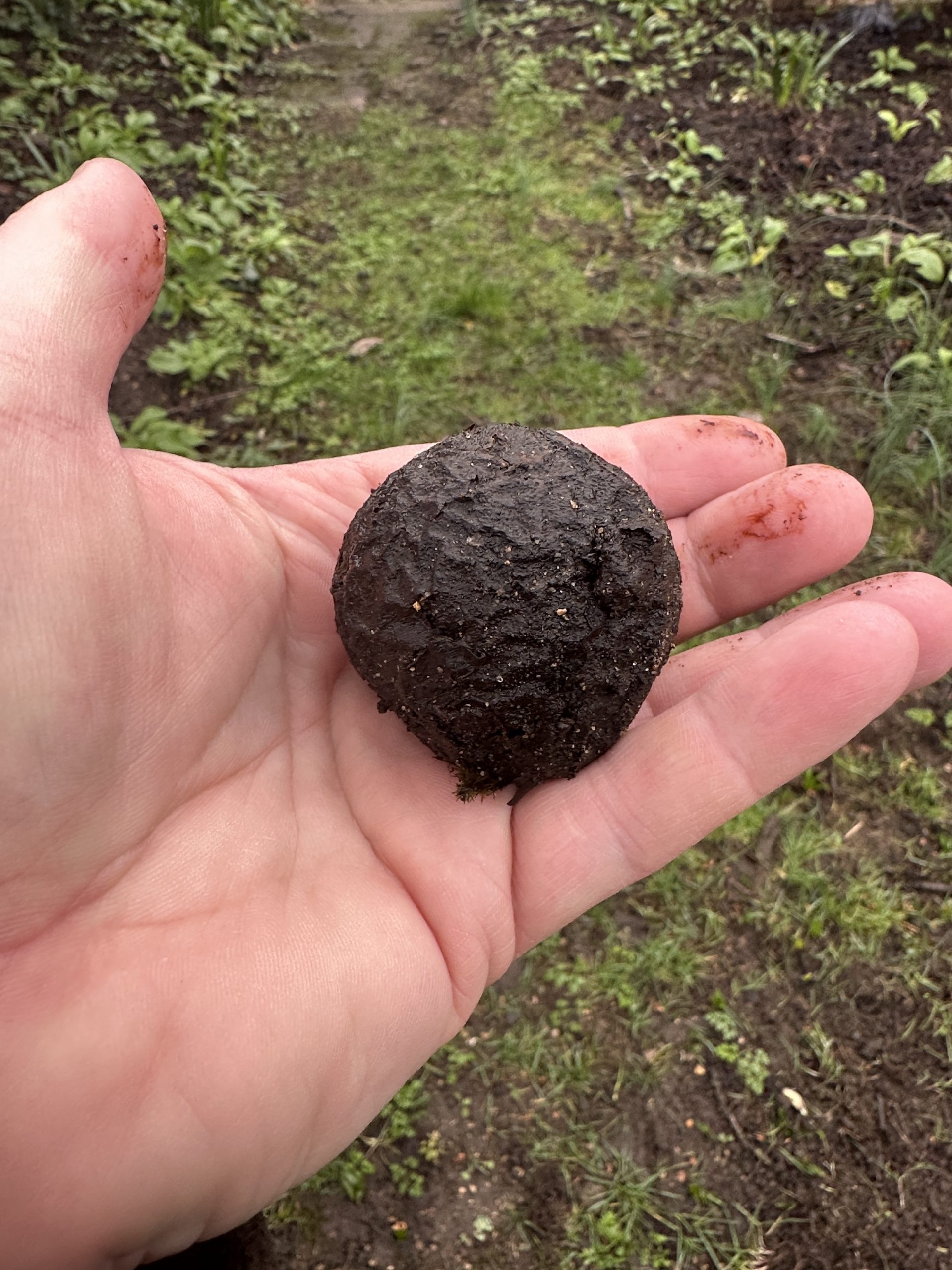
Black walnut nut with fruit husk
Propagation and Control
Black walnut prefer fertile soils and need plenty of light for optimal growth and nut production. Generally a hardy tree, they are susceptible to a number of pests and diseases, including walnut caterpillars which eat the foliage and grey squirrels which can devastate a young tree. A disease complex known as Thousand Cankers disease is currently threatening black walnuts in several western US states – fungus spread by the walnut twig beetle causes cankers which lead to branch dieback and tree decline.
Source and Reference Materials
Information detailed in this post has been obtained from the author’s own knowledge and photographic library where possible. Additional source of information and photographs include:
Van den Berk, B.V. (2004). Van den Berk on Trees. Van den Berk Nurseries