
26 Mar Monkey Puzzle
Monkey Puzzle (Araucaria araucana)
Some trees are instantly recognisable – oak with their acorns, holly with their spiky leaves, or the curtain-like foliage of a weeping willow. This month we have selected a particularly identifiable one. With its tiered form and smothering of spiky leaves, the Aruacaria Araucana, or Monkey Puzzle tree as it has become known, looks like something from a prehistoric forest. Indeed it dates back to the time of the dinosaurs, with fossils of its relatives stretching back over 200 million years.
First identified by Europeans in Chile in the 1780s it was originally named Pinus Araucana. The name Araucana is derived from the native Araucanians who used the seeds of the tree as part of their staple diet. Its popular English name came from a comment made about it in 19th century Britain – where it was still very rare – that “it would puzzle a monkey to climb that.”
In South American indigenous cultures the tree is respected as a provider. Its wood is used for building, carpentry and furniture, and the seeds are a good source of carbohydrate. In Britain however it became linked with the Devil, with one widely-shared superstition being that he sits in this tree. You should be quiet when you pass underneath so as not to attract his attention as this will bring you bad luck!
Appearance and Identification
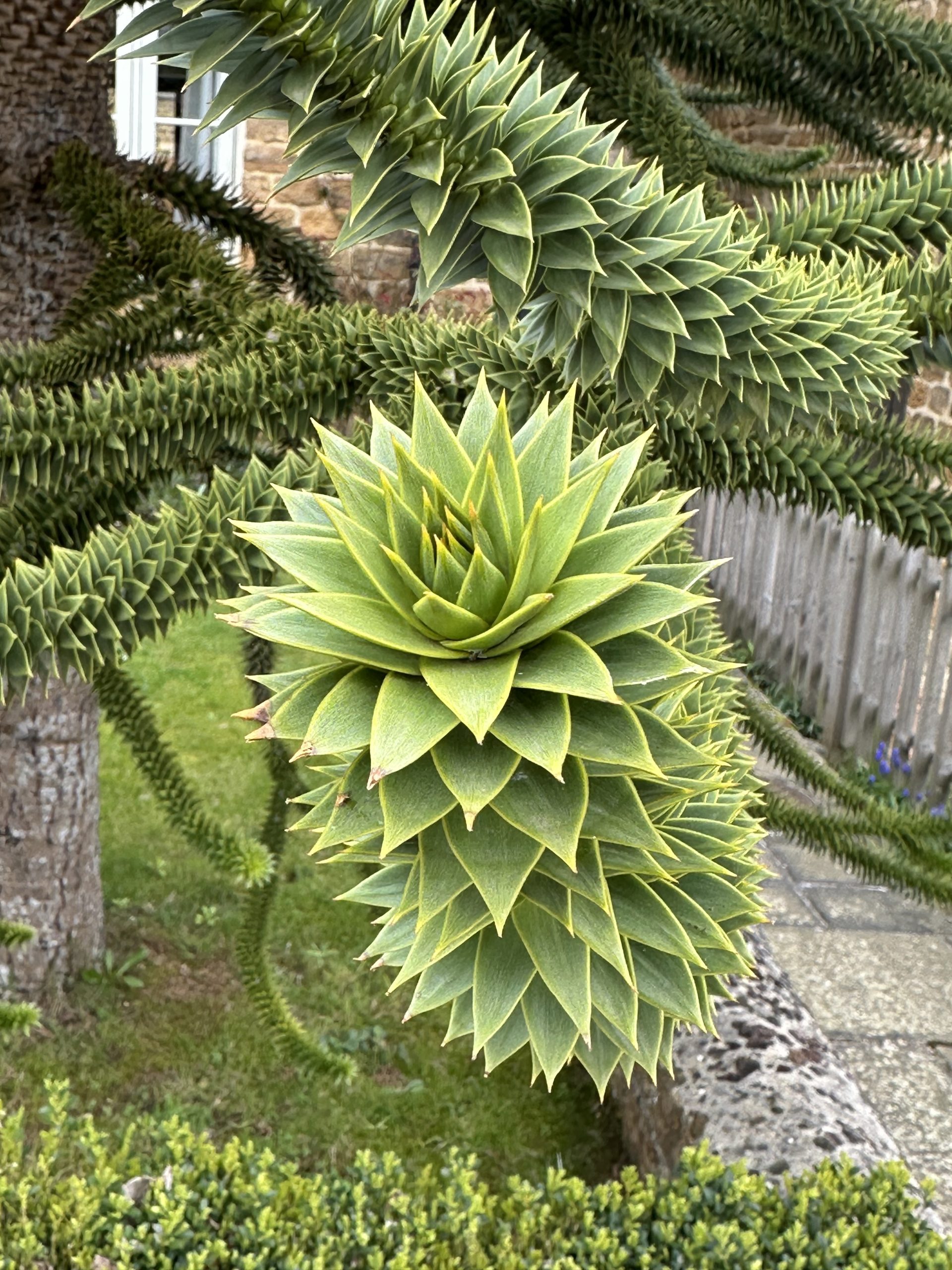
The form of the monkey puzzle is dramatic: a tall, straight trunk reaching up to 30m in height and rising into a tiered crown of stout, horizontal branches. These branches are covered in thick, overlapping, triangular leaves which are rigid, dark glossy green and spiky at the tip. The leaves can be up to 3–5 cm long and are leathery to the touch, arranged in spirals around the branches and trunk.
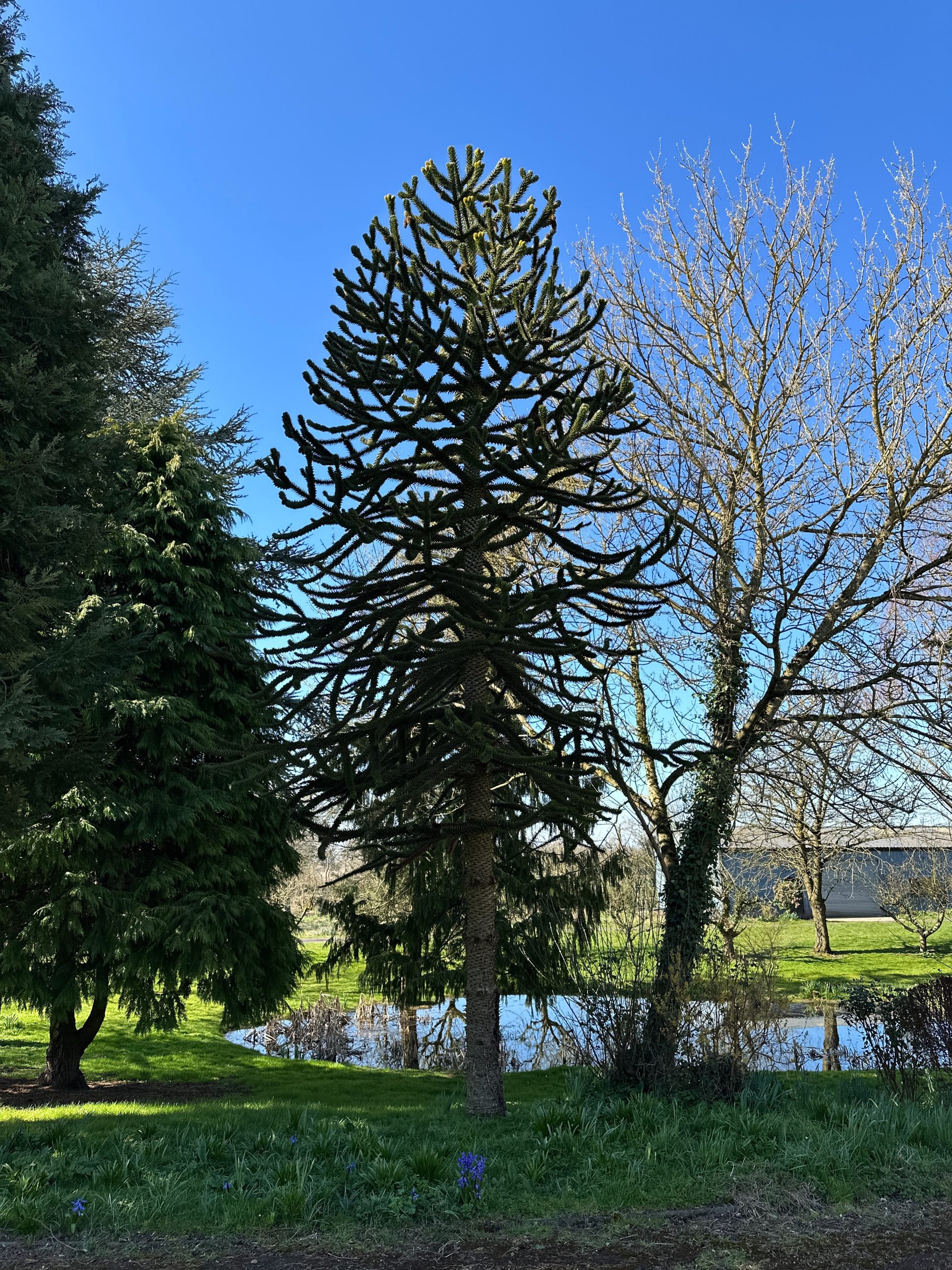
Early mature Monkey Puzzle
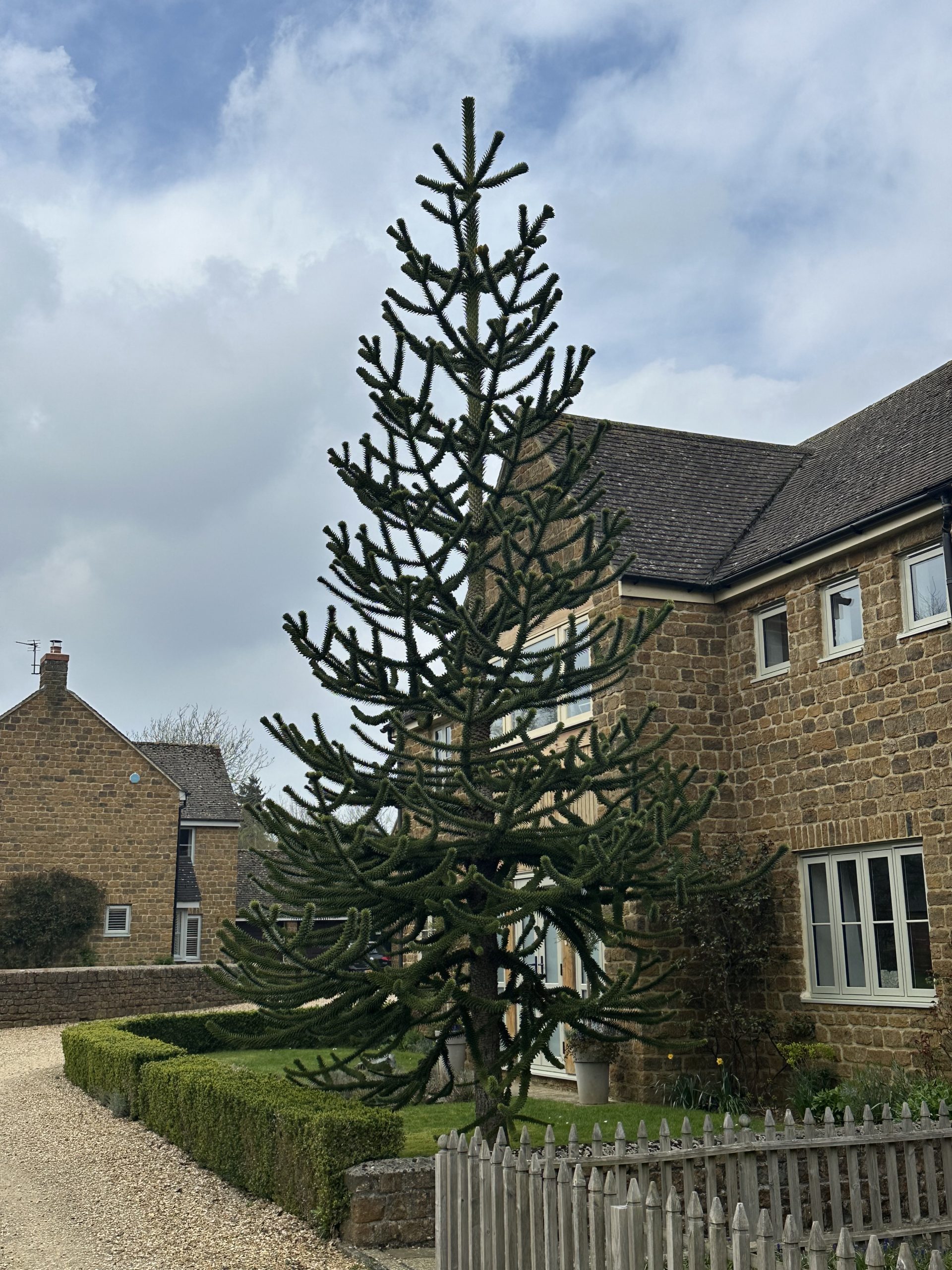
Monkey puzzle tree
Monkey puzzle leaves
Monkey puzzles are dioecious, meaning male and female flowers grow on separate trees. The male catkins are 8-12cm long clusters of narrow green stamens which turn yellow and then brown at the end of summer when they release their pollen. The female cones ripen over two to three years, eventually turning brown and releasing their seeds.
Propagation and Control
Native to the Andean regions of southern Chile and western Argentina the monkey puzzle is a cool-temperate species. It prefers mild winters and cool summers, and can grow in a range of soils, although these need to be well-drained.
It is generally tough and low-maintenance, but can be affected by root rot or needle blight if growing in poorly draining or persistently wet conditions. Its biggest threat however is from deforestation and illegal logging, which have decimated its numbers in its native habitat to the point of being classified as endangered.
Source and Reference Materials
Information detailed in this post has been obtained from the author’s own knowledge and photographic library where possible. Additional source of information and photographs include:
Van den Berk, B.V. (2004). Van den Berk on Trees. Van den Berk Nurseries